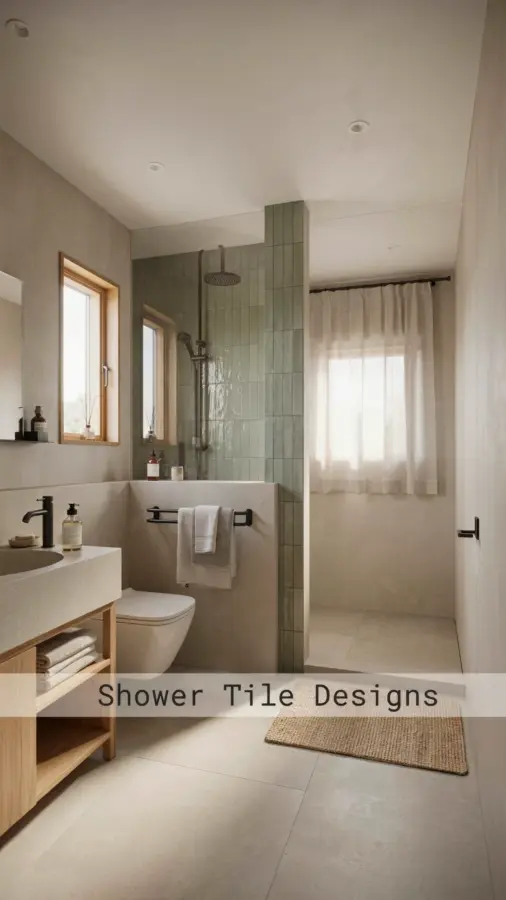
If you have a compact bathroom and you’re searching for small bathroom shower tile ideas, this modern white and gray design might be exactly what you need. I recently helped a friend redo her tiny ensuite, and the difference that smart tile choices made was huge. The trick is to pick materials and layouts that trick the eye into seeing more space while keeping the look clean and practical. Below I’ve rounded up five distinct themes that work beautifully together, each one with a specific purpose in mind. Whether you plan on tackling the tiling yourself or just want to gather inspiration, these ideas will give you a solid starting point.
Vertical Subway Tile Layout for Height
One of the easiest ways to make a small shower feel taller is to lay subway tiles vertically instead of the classic horizontal brick pattern. White subway tiles with gray grout create a crisp, modern contrast that draws the eye upward. I used this in a 5×5 foot bathroom and the ceilings suddenly felt a full foot higher.
For the best effect, stick with 3×6 inch or 4×8 inch tiles in a glossy finish. Glossy surfaces reflect light, which helps open up the space even more. The gray grout adds a subtle grid that gives the wall texture without overwhelming it. When you stack tiles in a straight vertical column, the lines become strong vertical arrows that guide your gaze from floor to ceiling.
If you want a bolder look, consider a herringbone vertical pattern. It still has the upward motion but adds a zigzag detail that feels more decorative. Just be aware that herringbone uses more tile cuts, so it takes a bit longer to install. For a first-time DIY project, the simple vertical stack is easier and just as effective.
Large Format Floor Tiles for Fewer Grout Lines
The floor of a small shower can quickly become a visual mess if you use tiny mosaic tiles with tons of grout lines. Large format floor tiles, ideally 12×24 inches or even 24×24 inches, create a seamless look that makes the footprint appear larger. Fewer grout lines also mean less scrubbing, which is a huge bonus for a busy household.
Choose a gray porcelain tile with a subtle texture or a matte finish. Porcelain is water-resistant and durable, plus it pairs perfectly with white wall tiles. I recommend a tile that mimics natural stone or concrete for a modern, understated vibe. Make sure to use a matching gray grout to keep the floor looking like a single slab rather than a patchwork of squares.
One practical tip: order a few extra tiles in case of breakage during cutting, and always check the slip rating for shower floors. Look for a coefficient of friction (COF) of 0.6 or higher for safety. Large tiles can be slippery when wet if they have a polished surface, so stick with a matte or lightly textured finish.
Peel and Stick Tile Backsplash Behind the Vanity
Not every surface in a small bathroom needs a full demolition job. A peel and stick tile backsplash behind the vanity is an affordable update that adds personality without the mess of mortar. I tried this on a weekend and it took only about two hours from start to finish. The key is to choose a style that echoes your shower tile without being an exact match.
For a cohesive white and gray scheme, look for peel and stick tiles in a subway shape, a hexagon, or a small square pattern in a light gray tone. The adhesive is strong enough to stick to clean drywall or painted walls, but it can be removed later without damaging the surface. Just make sure the wall is smooth and free of grease or dust before you start.
If you want to go a step further, use a temporary trim piece along the top edge to hide any uneven cuts. This is a great option for renters or anyone who wants to refresh the space before a bigger renovation. And because it’s so easy to replace, you can change the backsplash whenever your style evolves.
Gray Grout as a Design Feature
Gray grout isn’t just a practical choice to hide dirt. It can be a design element that ties the whole shower together. When you pair white subway tiles with a medium gray grout, the grid becomes visible and adds a clean, structured look. This is especially helpful in a small shower where white walls could feel too sterile.
Test your grout color on a spare tile before committing. A light gray grout like “Silver” or “Pewter” gives a soft contrast, while a dark charcoal grout creates a bold, graphic effect. For the modern white and gray aesthetic, I prefer a grout that is two or three shades darker than the tile, not pure black. Black grout can feel too harsh in a tiny space unless you have very good lighting.
Don’t forget that grout needs to be sealed properly, especially in a shower that gets daily moisture. Unglazed or porous tiles will absorb grout stain, so use a urethane or epoxy grout for the best durability. These also resist cracking and are easier to clean over time. A little extra effort during installation saves hours of scrubbing later.
Balancing White and Gray for a Cohesive Look
The trick to a successful modern bathroom design is balance. Too much white can feel like a hospital, while too much gray can feel cold and dim. Aim for a ratio of about 70 percent white and 30 percent gray. White subway tiles on the shower walls give you that bright, airy base. Gray then comes in through floor tiles, grout, and maybe a gray vanity or mirror frame.
For a warmer feel, choose a gray with warm undertones like taupe or greige rather than a cool blue-gray. Add a few touches of brushed nickel or chrome fixtures to bounce light around. A simple white vanity with a gray marble countertop works perfectly with the shower theme. If you want a pop of color, keep it small like a green plant or a patterned towel.
Remember that lighting makes a huge difference. Install a recessed light or a small chandelier with a
#smallbathroom #showerideas #bathroomdesign #diytile #moderninterior
Leave a Comment