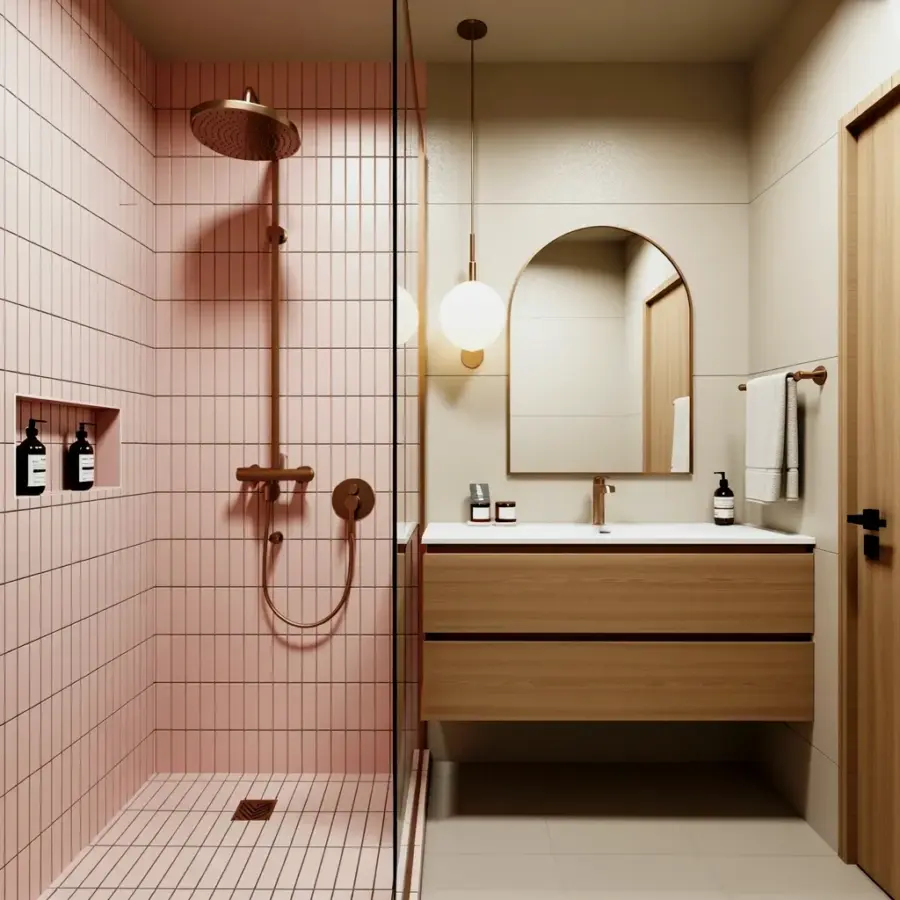
When I started hunting for bathroom mosaic tile ideas, I kept getting the same glossy subway tile ads over and over. But the room I was renovating had a cast iron tub, old wooden beams, and windows that let in actual morning light. So I went in the opposite direction. I bought a sample of slate, then a piece of limestone, and honestly, they changed my whole plan.
Why Slate Floors Work Better Than You Think
Slate looks like it belongs on a mountain trail, not in a bathroom. That’s exactly why I almost dismissed it. But the texture isn’t just for looks. Those natural fissures and cleft surfaces give you real slip resistance under wet feet. I’ve stepped out of the shower onto mine a hundred times and never once felt that scary sliding moment.
The color variation is wild too. My dark grey slate has rust streaks, mossy green patches, and the occasional deep charcoal vein. No two tiles match. That’s the point. You don’t have to worry about pattern matching or perfect alignment because the stone already looks imperfect in the best way.
One thing nobody warned me about: slate can be brittle at the edges. Handling it during installation took patience. But once it’s down and sealed, it’s solid as a rock. No pun intended. Well, maybe slightly intended.
Limestone Bathroom Floors: The Soft-Spoken Option
Limestone is the quiet cousin of slate. It’s usually cream, beige, or warm ivory, and it feels almost silky under bare feet. If slate is the rugged farmhouse texture you can feel, limestone is the softer, calmer alternative that still looks natural.
But here’s the honest catch. Limestone is porous. It stains more easily than slate, and acidic things like vinegar or certain cleaners will etch the surface. I put limestone in a guest bathroom instead of my main one, just to be safe. That worked out well.
If you’re drawn to that light, airy natural stone bathroom look, limestone delivers it without the cold grey industrial vibe. It pairs beautifully with matte black fixtures and warm wood tones. I’d still pick slate for daily heavy use, but limestone has its place.
Sealing Natural Stone: The Step You Can’t Skip
I learned this the hard way. I sealed my slate floor once, thought I was done, and then a month later I noticed a dark water stain near the shower. The sealer had worn off faster than expected because I used a cheap one. Don’t do that.
Get a high-quality penetrating sealer made specifically for natural stone. Apply two coats, let it dry completely, then test it by splashing a few drops of water on the floor. If the water beads up, you’re good. If it soaks in, you need another coat.
Reapply the sealer every year or two. It takes about an hour. Yes, it’s an extra chore, but it’s the difference between a stone floor that stays beautiful and one that slowly turns into a splotchy mess.
What Grout Color Does for Stone Mosaics
This is the detail that makes or breaks the whole look. I almost went with white grout for my slate floor. Good thing I tested it first. White grout on dark slate looks busy and dirty within a week. I switched to a warm grey grout that matches the lighter pieces in the stone.
For limestone, you want grout that’s slightly darker than the tile, not lighter. That way the mosaic pattern shows up without every line screaming for attention. The grout lines become part of the rustic farmhouse texture instead of an ugly grid.
Also, use unsanded grout for tighter joints. Stone mosaic tiles often have narrow gaps, and sanded grout can scratch softer surfaces. Ask your tile guy about it or read the bag carefully. It’s a small choice with a big effect.
Real-World Cleaning Routine (Yes, It’s Simple)
Everyone assumes natural stone floors are high maintenance. In my experience, the daily routine is nothing special. I sweep or vacuum once a week, and mop with a pH-neutral stone cleaner every couple of weeks. That’s it.
The stuff you need to avoid is more important. Anything acidic, like lemon spray or vinegar-based cleaners, will eat away at the sealer and dull the stone. Also avoid abrasive scrub brushes. A soft mop or microfiber cloth handles everything.
Here’s the shortcut I actually live by:
- Wipe up spills right away, especially toothpaste and soap scum.
- Use a shower mat if you have limestone, because standing water is the enemy.
- Keep a small squeegee in the shower and use it for 30 seconds after your rinse.
- Re-seal once a year and you’ll forget you ever worried about maintenance.
That’s the whole secret. The floor doesn’t care about perfection. It just needs basic respect.
Rustic Farmhouse Texture Without Going Full Barn
I know the rustic farmhouse trend can go overboard. Somehow people end up with a bathroom that looks like a set from a chopped-up western. The trick is to let the stone do the talking and keep everything else simple.
I paired my slate mosaic floor with plain white walls, a wooden vanity, and a round metal mirror. No barn door, no cast iron signs, no fake lanterns. The natural stone bathroom already carries all the warmth and texture you need.
For limestone, think linen towels, a bamboo stool, and maybe a small green plant. The palette stays earthy and muted, but the room still feels clean and modern. That’s the balance I aimed for, and it worked.
Picking the Right Finish: Honed vs. Tumbled
This is the sneaky choice that changes everything. Honed slate has a smooth, matte finish with a slight sheen. It’s easier to clean and still safe underfoot. Tumbled slate looks more worn and antiqued, with softer edges and a rougher surface.
I went with honed for my bathroom floor because it’s a touch more practical. The tumbled version is gorgeous for shower walls or accent strips, though. It gives you that extra rustic texture without covering every square foot of walking space in bumps.
For limestone, I’d lean toward honed too. Polished limestone is slippery when wet, and tumbled limestone can feel gritty under bare feet. Honed is the middle ground that works for real life.
Test a few samples before you commit. Order them online or steal them from a tile store. stand on them with wet socks. Make the floor prove itself before you spend money on the full order.
In the end, I’m glad I ignored the glossy tile trend. My slate floor looks like it came from an old English cottage, but it handles like a workhorse. The limestone guest bath is softer and lighter, and every visitor asks about it.
If you’re stuck between the two, think about how you use the room. Daily shower and kids? Slate. Powder room or guest bath? Limestone. Whichever you pick, just give it the sealer it deserves and don’t obsess over every scratch. Natural stone is supposed to age with you. That’s part of its charm.
So, which one would you put in your bathroom? Have you already made the mistake of skipping the sealer? Tell me about your stone floor adventures, I’d love to hear them.
Leave a Comment